

This post may contain affiliate links. If you buy through them, I may earn a small commission at no extra cost to you. I only share things I actually use.
Hi, I’m Elle! I’m a mom of 3 who bakes sourdough at home in a hot climate, and this is the story of how I went from a mouldy first starter to baking bread every week for my family (and selling a few loaves too).
Quick disclaimer: I’m not a sourdough expert. I’m still learning, and I’m sharing the messy parts too, because that’s how I learned, from people who shared loads of free content and didn’t pretend it was all perfect.
Key Takeaways
- Your first sourdough starter might fail. Mine did, twice.
- A sourdough starter is just flour and water that you feed regularly. It’s easier than it sounds once you relax.
- You don’t need 10 jars of starter (I know, I know).
- Baking sourdough in a hot climate means faster timings, so adjust recipes written for cold weather.
- You don’t need a Dutch oven. Everyday loaf pans work.
- I’m not an expert. I’m learning as I go and sharing my fails along with my wins.
Why I started baking sourdough bread at home
It started as a curious experiment, honestly. My parents are diabetic and they love their bread, every single day. They were told to make bread at home with spelt flour and make it sourdough so it’s more healthy, apparently.
So they started buying sourdough loaves instead. Then they came to me and said it was 7x more expensive than their usual bread. Ouch. I already bake bread for my family regularly, so I thought, why not? I don’t mind trying.
What is a sourdough starter?
If you’re new here, a sourdough starter is a mix of flour and water that you feed regularly, so wild yeast and good bacteria grow in it. That’s what makes your bread rise instead of store-bought yeast. Feeding it just means adding fresh flour and water to keep it alive and bubbly.
My sourdough starter fails (and what finally worked)
Baking with regular yeast was straightforward. Making the starter? Wow. That was a challenge for me.
After watching loads of videos, I tried twice. First attempt: mould. (If you see fuzzy or coloured mould on your starter, that’s a throw-it-out-and-start-again situation.) Second time: my timings were off because I got distracted, and that failed too. It was supposed to be easy and I was so discouraged.
Third time, I didn’t put it in a dark cupboard like everyone says, and I was just more relaxed about the whole thing. And it just happened. Funny how that works.
The 10 jars of starter situation
For a while I fed my starter every week. Early on I kept making “emergency” batches to keep in case something went wrong. Hello, I ended up with almost 10 jars of starter at assorted levels, got totally confused, and was too terrified to throw any of them out.
Now I’m way more relaxed. I know it’s easy to revive and build back up, so I don’t need to keep so much. And sourdough discard (the bit you take out of your starter before feeding it) can be used up in so many recipes. More on that soon!
Sourdough in a hot climate: why my timings are different
The baking part was a challenge too. I relied a lot on online sourdough recipes, and it was all trial and error until I found my own groove.
Here’s something nobody told me: where I live is hot, and most of the timings out there are written for cold weather. My starter takes almost half the time that other people’s do, so everything moved faster than the recipe said. Warmer kitchen means faster fermentation, so watch your dough instead of the clock. It’s all about learning your own environment and making it suit your schedule.
Sourdough bread without a Dutch oven
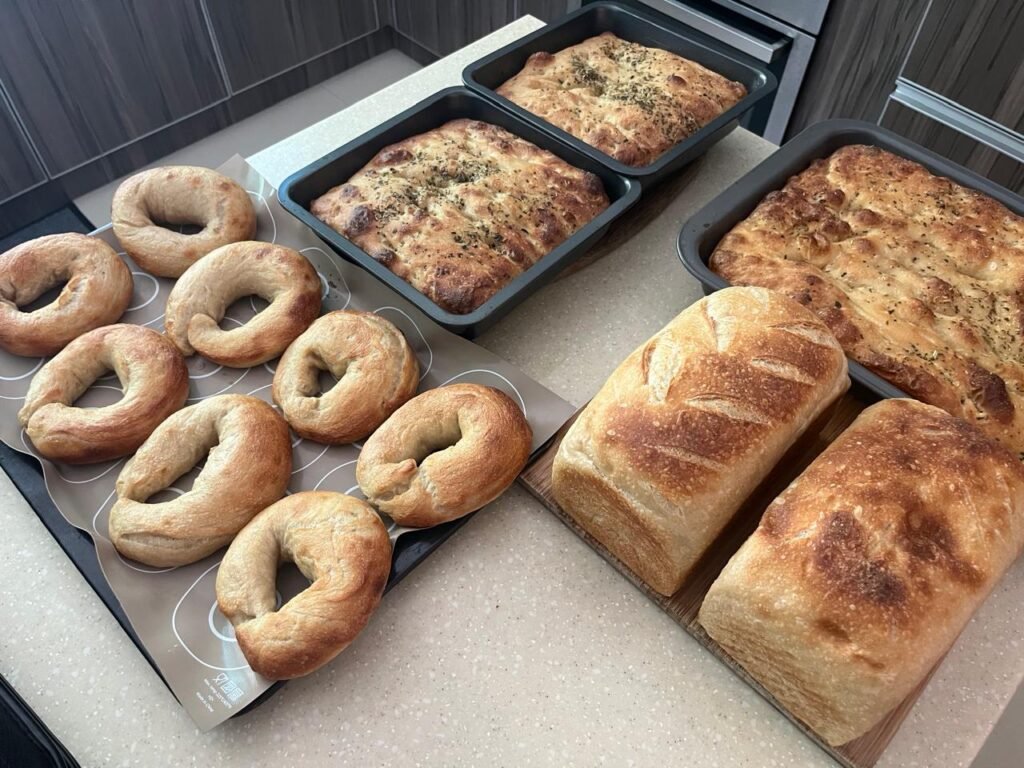
I bake mine in regular loaf pans, no fancy Dutch oven needed. If you want to see how, check out my Beginner Sourdough Without a Dutch Oven guide (coming soon). I’ve also made homemade sourdough bagels and sourdough focaccia, and I’ll share those recipes too.
What I’m learning now: sourdough hydration and inclusions
I’m definitely still learning. My latest project is hydration, which is how much water is in your dough compared to the flour. More water usually means a wetter, stickier dough, so I’m experimenting to see what works for me and my hot kitchen.
I’m also already playing around with inclusions (the extras you mix into your dough) and trying different fillings. It’s been good so far, and I’ll share what works and what doesn’t.
EDITORIAL TODO: Add favourite inclusion or filling.
These days I bake regularly for family and friends, and I sell a little bit too, which has added to my income. Not bad for something that started as a “let’s see if I can do this.”
So come along with me as I share what I’ve learned and what I’m still learning.
Sourdough FAQ
Is sourdough hard to make for beginners?
The baking can be learned. The starter was the hard part for me, and it took three tries. Don’t be discouraged if yours fails.
Why did my sourdough starter fail?
Mine failed once from mould and once because I got distracted and my timings were off. The third time I was more relaxed and it worked.
Are you a sourdough expert?
Nope! I’m still learning, and I share my fails and my wins so you can learn from them, just like I learned from other people’s free content.
Can you make sourdough bread without a Dutch oven?
Yes! I bake mine in everyday loaf pans.
How often do I need to feed my sourdough starter?
I used to feed mine every week. Now I know how to manage it, so I don’t need to keep so much. It’s easy to revive and build back up.
Why is my sourdough rising faster than the recipe says?
If you live somewhere hot like I do, it will move faster. Most recipes are written for cold weather, so watch your dough, not the clock.
Elle’s Tip
Don’t aim for perfect. Your kitchen, your weather and your schedule are different from the video you’re watching, so adjust the timings to suit you. And please, don’t throw out your starter in a panic like I almost did (more than once).
My Sourdough Baking Essentials
I’m putting together a list of the simple baking tools and everyday equipment I use or recommend, including my loaf pans. I’ll share it here soon.
